
Colorado Native Pollinators
Pollinators are the "unsung heroes" of Colorado’s natural heritage, serving as a vital link in the state's environmental and economic health. Colorado relies on these invertebrate creatures to sustain its agriculture, support diverse ecosystems (wildflowers, grasslands, forests), boost the economy through recreation and tourism, and maintain overall biodiversity.
Ecological Importance
- Food Systems: One in every three bites of food we eat depends on pollinators.
- Biodiversity: Pollinators are crucial for the reproduction of native plants, which form the base of ecosystems in gardens, grasslands and forests.
- Wildlife Support: Healthy plant diversity, maintained by pollinators, provides food (seeds, fruits, and nuts) and shelter for birds and various mammals.
Economic Importance
- Agriculture: Pollinators ensure high-quality yields for signature crops like Palisade peaches, Rocky Ford melons, as well as squash, fruits, and alfalfa, contributing billions to Colorado's economy.
- Cultural & Recreational Identity: The vibrant wildflowers and landscapes that sustain Colorado’s massive outdoor recreation industry-from eastern plains to high-altitude meadows to mountain parks- depends on the pollination of native flora.
Colorado's Unique Pollinators
- Colorado is home to 1,006 species of native bees, hundreds of butterfly species, plus moths, predatory wasps, beetles, flies, bats, and hummingbirds.
- The state sits on the Monarch Butterfly's spring and fall migration path.
Pollinator populations in the U.S. are significantly declining, with over 22% of native North American species at elevated extinction risk.
Key Threats, Causes, and Protections
- Habitat Loss & Fragmentation: Urban development, roadways, lawns or non-native crops and landscapes reduce food and nesting sites. Air pollution can mask floral scents.
- Pesticides: Exposure to certain pesticides, especially neonicotinoids, harms pollinators.
- Climate Change: Altered flowering times can create mismatches between pollinators and their food sources, while changing temperatures affect species distribution.
- Pests & Diseases: Mites (like Varroa for honeybees), pathogens, and invasive species may spread from improperly managed populations to wild populations.
- Poor Nutrition: Lack of diverse native forage leads to inadequate diets, weakening pollinator health.
- Invasive Species: Invasive plants outcompete native flora, and invasive pests threaten native pollinators. Mismanaged honeybee colonies may outcompete native bees for resources, further threatening their survival.
In response, Colorado reclassified pollinators as protected wildlife in 2024, allowing for better conservation through land management and policy.
For more information, visit Colorado Public Radio, Colorado State University and Colorado Department of Natural Resources.
Plant for Pollinators by Landscaping for Where You Live
Coloradoscaping emphasizes the use of plants that are native to Colorado, inherently thrive in Colorado’s different climates and conditions, and celebrate our state’s natural beauty. Use a variety of plants that bloom from early spring to late fall.
The Importance of Native Plants to Maintaining Pollinator Populations
Native pollinators have evolved to seek and find food from plants in their environment for thousands of years. They focus on certain colors, flower shapes, textures, and scents to find the nectar and pollen they need. This CSU fact sheet explains that “studies have shown that native plants are four times more attractive to native bees than introduced ornamentals.” It goes on to say that “native bees vary greatly in size, shape, and color” and that “most of the native species in Colorado are simply not inclined to sting or do not have enough venom for a painful sting, even if they try.”
- Provide Larval Hosts Plants: Butterflies require host plants for their larvae (caterpillars) to eat. Celebrate when you find them in your garden; it’s a sign of success! Avoid the use of chemicals to remove them.
- Avoid or Reduce Pesticides: Avoid the use of insecticides, particularly on flowering plants. Sign pledges to make properties pesticide-free and advocate for safer alternatives (dormant oils, insecticidal soaps, hand-pick off plants). Expect and accept some insect damage.
- Provide Water & Shelter: Add shallow water features with rocks and leave leaf litter, hollow stems, and dead wood for overwintering native bees, butterflies, moths, and beetles.
- Leave Some Areas of Bare and Undisturbed Soil: 70% of Colorado native bees are ground dwellers; tilling destroys nesting sites. Mulch and landscape fabric prevents bees from digging into the soil.
- Let Autumn Leaves Lie Until Spring: Leaf litter provides insulation against cold, moisture, and protection from predators. Conservation guidelines emphasize leaving these habitats undisturbed until spring temperatures consistently exceed 50°F (10°C), ensuring they emerge in spring to pollinate plants.
- Above Ground Nesting Sites: Keep hollow stems and wood (snags/dead wood). Avoid pruning perennials during fall. The dry stems provide stem nesting bees, flies, moths, and predatory wasps with a place to overwinter; they also add winter interest to your garden. Prune stems back during late spring once adults have emerged from the stems.
- Support Local Efforts: Get involved with chapters like the People and Pollinators Action Network in Northern Colorado and Wild Ones Front Range Chapter.
Butterfly Pavilion’s PACE initiative, focuses on habitat restoration, education, and community science. Participate in projects like the Colorado Butterfly Monitoring Network to track populations.
What makes a plant “native”? A native plant (or “straight species”) is a species that occurs naturally in a particular region, ecosystem and/or habitat, as a result of natural processes rather than human intervention, and was present in North America prior to European settlement.
Doug Tallamy and Rick Darke define a native plant in their book The Living Landscape as: “a plant or animal that has evolved in a given place over a period of time sufficient to develop complex and essential relationships with the physical environment and other organisms in a given ecological community.”
A nativar is sometimes a natural variant that has been found in the wild and brought into cultivation, but often it has been developed from a native species by a plant breeder, potentially altering their benefits to wildlife.
Cultivars and hybrid plants are selected and developed by humans for unique, desirable traits (for humans and not pollinators) like flower color, size, or disease resistance. Cultivars are named in single quotes after the species name (e.g., Malus domestica 'Honeycrisp'). A hybrid can be indicated by writing the names of the parent plants, in alphabetical order, linked by a multiplication sign (i.e. Acer × freemanii.)
As a result of these intentional breeding changes to the plants, it is highly recommended that one uses straight native species since they are naturally more attractive and important to the survival of our local native pollinators.
Bees and other pollinators (beetles, flies, moths, butterflies, hummingbirds, and bats) need food, water, shelter and space to support robust populations. Colorado is home to 1,006 native bee species, the vast majority of which are solitary. These bees nest underground in the soil, inside hollow stems of plants and in pre-existing tunnels.
While honeybees pollinate one third of the food we eat, native bees are responsible for pollinating 80% of the world’s flowering plants. However, habitat loss, pesticide exposure, disease, invasive species, and the effects of climate change are a few of the factors that threaten their survival in Colorado and around the world.
To attract solitary bees, provide the following:
- Leave Some Areas of Bare and Undisturbed Soil: 70% of Colorado native bees are ground dwellers; tilling destroys nesting sites. Mulch and landscape fabric prevents bees from digging into the soil.
- Provide Water: Furnish shallow dishes with pebbles and/or twigs for safe landing.
- Plant Natives: Focus on a variety of local native species that bloom from early spring to late fall for best results.
- Let Autumn Leaves Lie Until Spring: Leaf litter provides insulation against cold, moisture, and protection from predators. Conservation guidelines emphasize leaving these habitats undisturbed until spring temperatures consistently exceed 50°F (10°C), ensuring they emerge in spring to pollinate plants.
- Avoid Pesticides: Chemicals harm pollinators; reduce or eliminate their use.
- Above Ground Nesting Sites: Keep hollow stems and wood (snags/dead wood). Avoid pruning perennials during fall. The dry stems provide stem nesting bees, flies, moths, and predatory wasps with a place to overwinter; they also add winter interest to your garden. Prune stems back during late spring once adults have emerged from the stems.
Cavity-nesting bees (30% of Colorado Natives) which use existing holes in wood, hollow plant stems, or "mud" to build their nests: small carpenter, leafcutter, mason, wool carder, squash, yellow-faced, long-horned bees, and bumble bees. Also stem-boring moths and various predatory wasps.
Pollinators which overwinter in snags (dead standing tress) and woody debris: large carpenter, mason, leafcutter and pure green sweat bees; also overwintering adult butterflies.
See resources page for plant suggestions.
Check out Heritage Trail Pollinator Bed to see solitary and cavity-nesting pollinators in action!
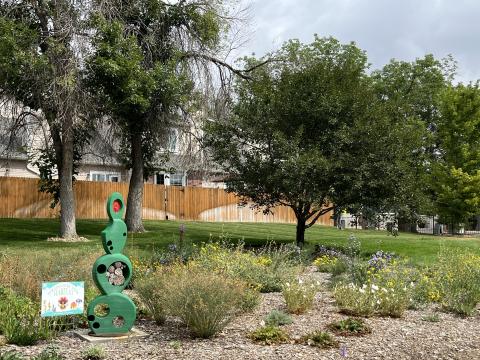
Bees and other pollinators (beetles, flies, moths, butterflies, hummingbirds, and bats) need food, water, shelter and space to support robust populations. Colorado is home to 1,006 native bee species, the vast majority of which are solitary and do not live in hives like honeybees. In fact, 70% of Colorado native bees tunnel into the soil to create their nests.
While honeybees pollinate one third of the food we eat, native bees are responsible for pollinating 80% of the world’s flowering plants. However, habitat loss, pesticide exposure, disease, invasive species, and the effects of climate change are a few of the factors that threaten their survival in Colorado and around the world.
To attract Colorado's native ground-nesting bees provide the following:
- Leave Some Areas of Bare and Undisturbed Soil: 70% of Colorado native bees are ground dwellers; tilling destroys nesting sites. Mulch and landscape fabric prevents bees from digging into the soil.
- Provide Water: Furnish shallow dishes with pebbles and/or twigs for safe landing.
- Plant Natives: Focus on a variety of local native species that bloom from early spring to late fall for best results.
- Let Autumn Leaves Lie Until Spring: Leaf litter provides insulation against cold, moisture, and protection from predators. Conservation guidelines emphasize leaving these habitats undisturbed until spring temperatures consistently exceed 50°F (10°C), ensuring they emerge in spring to pollinate plants.
- Avoid Pesticides: Chemicals harm pollinators; reduce or eliminate their use.
- Above Ground Nesting Sites: Keep hollow stems and wood (snags/dead wood). Avoid pruning perennials during fall. The dry stems provide stem nesting bees, flies, moths, and predatory wasps with a place to overwinter; they also add winter interest to your garden. Prune stems back during late spring once adults have emerged from the stems.
Common native ground-nesting bees in Colorado include sweat, cellophane, mining, digger, and some bumble bees.
See resources page for plant suggestions.
Check out Grand View Ponds Pollinator Bed to see ground nesting bees in action!
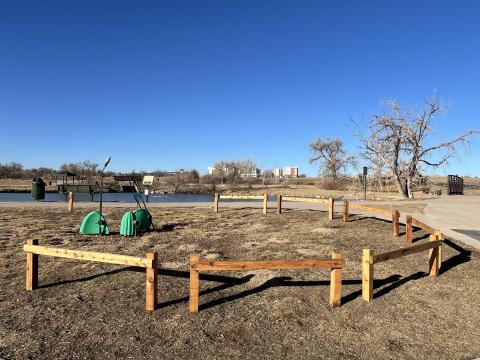
Colorado's night pollinators are mainly moths, beetles, bats, flies, and even some specialized nocturnal bees which rely on pale, fragrant, night-blooming plants. Both day- and night-active pollinators face many threats, including habitat loss, pesticide exposure, disease, invasive species, and the effects of climate change. One hazard unique to nocturnal pollinators is light pollution. Artificial lights disorient moths and research has found this can impair finding mates, evading predators, and pollinating plants.
To attract night-time pollinators, provide the following:
- Plant: Create a "moon garden" with pale, fragrant flowers that open at night.
- Reduce Light Pollution: Turn off exterior lights, use dim/low-voltage, or motion-activated lights to reduce disorientation.
- Leave Some Areas of Bare and Undisturbed Soil: 70% of Colorado native bees are ground dwellers; tilling destroys nesting sites. Mulch and landscape fabric prevents bees from digging into the soil.
- Provide Water: Furnish shallow dishes with pebbles and/or twigs for safe landing.
- Plant Natives: Focus on a variety of local native species that bloom from early spring to late fall for best results.
- Let Autumn Leaves Lie Until Spring: Leaf litter provides insulation against cold, moisture, and protection from predators. Conservation guidelines emphasize leaving these habitats undisturbed until spring temperatures consistently exceed 50°F (10°C), ensuring they emerge in spring to pollinate plants.
- Avoid Pesticides: Chemicals harm pollinators; reduce or eliminate their use.
- Above Ground Nesting Sites: Keep hollow stems and wood (snags/dead wood). Avoid pruning perennials during fall. The dry stems provide stem nesting bees, flies, moths, and predatory wasps with a place to overwinter; they also add winter interest to your garden. Prune stems back during late spring once adults have emerged from the stems.
See resources for plant suggestions.
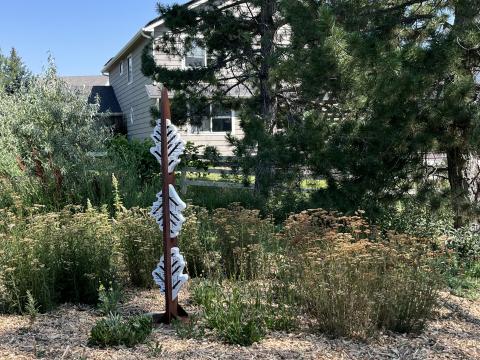
Check out Park Village Pollinator Bed to see nighttime pollinators in action!
PDFs & Books
- Gardening & Pollinator Guides
- Save The Stems
- SUBURBITAT: A Guide to Restoring Nature Where we Live, Work, and Play by Jim Tolstrup
- Bringing Nature Home: How You Can Sustain Wildlife with Native Plants by Douglas W. Tallamy
Community Involvement
Native Pollinator Vendors
History
The concept of Xeric gardening was created by Denver Water in 1981 in order to promote low water use landscaping. The word Xeriscape was formed by combining the word "landscape" with the Greek word for dry, "xeros". Xeriscape gardening is a method of combining low water plants with appropriate hardscapes, and small turf areas, that sustainably reduces urban water consumption. The Xeriscape Demonstration Garden at the Margret Carpenter Recreation Center was installed in 1997 and is intended to give residents an opportunity to observe plants that are successful in a low water environment.
Xeriscape is a combination of seven core principles that when effectively implemented will result in landscape water conservation. A common misconception of Xeric gardening is that you will have a yard consisting primarily of rocks and cactus devoid of color and interest. When the proper techniques are applied a beautiful arrangement of year round color will be achieved.
- Planning and Design
Determine the square footage of the areas to be planted. Sketch the house and surrounding areas including any existing pathways, structures, trees, and plants. Divide the yard into hydro zones according to water usage in each area: moderate, low, and very low. Draw in xeric plants arranged by height, texture, and water requirements. Be sure to consider areas of sun and shade for plant selection, moderate plants will do better in partial shade with less water. - Soil Improvement
Determine your soil composition: clay, loamy, or sandy. Although some plants can tolerate dense clay soils, most xeric species prefer loose well draining soils. Tilling in compost breaks up the soil and the organic matter retains moisture while increasing oxygen transfer. Four cubic yards per 1000 square feet, 8-12 inches deep is recommended. If the soil is extremely dense, sand or small gravel worked into the soil will help to increase drainage. - Appropriate Plant Selection
The key to appropriate plant selection is to choose groupings of plants with similar light, soil, and water requirements. Although some plants are adaptable, many Xeric plants will fail if they are receiving too much water. Consider native species that are adapted to Colorado's climate and soils. Trees are important as they block wind and reduce evaporation by shading the soil. Golden Rain, and Kentucky Coffe trees are excellent low water choices. Sages, grasses, Penstemons, and Agastache are trusted Xeric species. Delosperma and Sedum make excellent ground covers. (For more plant ideas see Plants Xeric Garden at the bottom of the page). - Practical Turf
Include turf areas that provide a defined function such as a play area for children or dogs. Minimize the area to only what you need. There are many types of grass to choose from depending on the amount of traffic they will be subjected to. Buffalo grass requires little water and is great for areas of low traffic. Never water turf daily unless you are trying to establish it. Daily watering will encourage shallow root growth and reduce the turf's drought tolerance. - Efficient Irrigation
Water efficiently with a properly designed irrigation system. Well planned sprinkler systems can save water when properly installed and operated. Drip irrigation works well for perennials, shrubs, and trees if appropriately monitored. To promote deep rooting, water infrequently but deeply. Irrigate according to the moisture in the soil, not on a fixed schedule. If you have a programmable system do not just program it at the beginning of the season and forget it. Reprogram every month according to precipitation levels. Turf areas should be watered separately from beds as they require different amounts of moisture. For all new transplants, including xeric, regular watering during the first year is essential to grow a strong root system. - Mulching
Mulch provides a cover for the soil, keeping it moist by preventing evaporation. It also acts as a weed deterrent and controls erosion. There are two appropriate types of mulch for Xeric gardening: organic and gravel. Stone or gravel mulch is relatively permanent, wood chips decompose over time and may need to be occasionally refreshed. Do not use excessive amounts of mulch as it will smother the plants and prevent the soil from receiving oxygen. Use sparingly around ground covers so they can spread. - Appropriate Maintenance
Control weeds, they will steal water from your plants! Too much water promotes weak growth and increases pruning and mowing requirements. Check soil moisture before watering. Insert a 6 inch screwdriver into the soil, if it can be easily inserted you do not need to water. Check sprinkler heads frequently to make sure that they are functioning properly. Set your mower to the highest level and make sure the blade is sharp. Leave your lawn clippings on the turf and use a mulching mower to recycle moisture and nutrients back into the yard.
The Xeriscape Demonstration Garden features a variety of grasses that enhance the landscape with year round interest. Native grasses are a great addition to xeric gardens as they are adapted to our dry climate and require very little water once established.
| Common Name | Botanic Name |
|---|---|
| Big Bluestem | Andropogon gerardii |
| Blue Fescue | Festuca glauca |
| Blue Oat Grass | Heliototrichon sempervirens |
| Dwarf Maiden Grass | Miscanthus sinensis |
| Karl Foerseter Reed Grass | Alamagrostis x acutilflora |
| Little Bluestem | Schizachyrium scoparium |
| Variegated Maiden Grass | Miscanthus sinensis variegatus |
The Xeriscape Demonstration Garden features a unique collection of perennials that range from very low to moderate water use. We hope that a visit to the garden will inspire you to try these interesting plants at home.
| Common Name | Botanic Name |
|---|---|
| Basket of Gold, Mountain | Aurina saxatilis |
| Black Eyed Susan, Denver Daisy | Rudbeckia hirta 'Denver Daisy' |
| Blanket Flower, Dwarf | Gaillardia 'Arizona Sun' |
| Blanket Flower, Oranges and Lemons | Gaillardia aristata 'Oranges and Lemons' |
| Blue, Flax | Linum perenne |
| Bugleweed | Ajuga 'Chocolate Chip' |
| Bugloss, Red Feathers | Echium amoenum |
| Chocolate Flower | Berlandiera lyrata |
| Columbine, Yellow | Aquilegia chrysantha |
| Coneflower, Purple | Echinacea purpurea |
| Coneflower, White | Echinacea purpurea 'White Swan' |
| Coral Bells, Silver Scrolls | Heuchera 'Silver Scrolls' |
| Coral Bells, Variegated | Heuchera sanguinea 'Snow Angel' |
| Curlique Sage | Artemisia Versicolor 'Sea Foam' |
| Daylily, Dwarf Gold | Hemerocallis 'Stella de Oro' |
| Flax, Yellow | Linum flavum 'Compacticum' |
| Gayfeather, Blazing Star | Liatris spicata |
| Hens & Chicks | Sempervivum tectorum 'Red Flush' |
| Honeysuckle, Kintzley's Ghost® | Lonicera reticulata Kitzley's Ghost® |
| Hyssop, Coronado® | Agastache aurantiaca Coronado® |
| Ice Plant, Fire Spinner | Delosperma Fire Spinner |
| Ice Plant, Mesa Verde® | Delosperma 'Kelaidis' |
| Ice Plant, Yellow Hardy | Delosperma nubigenum |
| Lamb's Ears, Silver Carpet | Stachys byzantina 'Silver Carpet' |
| Munro's Globe Mallow, Orange | Sphaeralcea munroana |
| Oregano, Hopflower | Origanum libanoticum |
| Partridge Feather | Tanacetum densum amani |
| Penstemon, Pineleaf | Penstemon pinifolius |
| Penstemon, Prairie Jewel® | Penstemon grandiflorus Prairie Jewel® |
| Penstemon, Yellow Pineleaf | Penstemon pinifolius 'Mersea Yellow' |
| Prairie Winecups | Callirhoe involucrata |
| Sage, Silver Mound | Artemisia schmidtiana |
| Salvia, Hot Pink | Salvia greggii Wild Thing |
| Salvia, May Night Purple | Salvia, May Night Purple |
| Sea Holly, Blue Cap | Eryngium planum 'Blaukappe' |
| Shasta Daisy 'Alaska' | Leucanthemum x superbum 'Alaska' |
| Skullcap, Cherry | Scutellaria suffrutescens |
| Stonecrop, Angelina | Sedum rupestre 'Angelina' |
| Stonecrop, Autumn Joy | Sedum 'Autumn Joy' |
| Stonecrop, Dragon's Blood | Sedum spurium 'Dragon's Blood' |
| Stonecrop, Old Man Bones | Sedum divergins |
| Sun Daisy, Lavender Mist® | Osteospermum Lavender Mist® |
| Sun Daisy, Purple Mountain® | Osteospermum barberiae compactum |
| Thyme, Lavender Creeping | Thymus praecox skorpilii |
| Twinspur, Coral Canyon® | Diascia integerrima Coral Canyon® |
| Yarrow, Moonshine | Achillea 'Moonshine' |
The Xeriscape garden has a large collection of shrubs that are very tolerant of harsh conditions. Many of the shrubs on display can survive with little to no water for months.
| Common Name | Botanic Name |
|---|---|
| Allegany Viburnum | Viburnum x rhytidophylloides |
| Apache Plume | Fallugia paradoxa |
| Bananna Yucca | Yucca baccata |
| Blue Mist Spirea | Caryopteris clandonensis |
| Cheyenne Mockorange | Philadelphus lewisii 'Cheyenne' |
| Compact American Cranberry | Viburnum trilobum compactum |
| Compact Oregon Grape Holly | Mahonia aquifolium 'Compacta' |
| Curl-leaf Mountain Mahogany | Cerococarpus ledifolus |
| Dwarf Korean Lilac | Syriga meyeri 'Palibin' |
| Frobel Spirea | Spirea x bumalda 'Frobelii' |
| Globe Spruce | Picea pungens 'Globosa' |
| Golden Currant | Ribes aureum |
| Hedge Cotoneaster | Cotoneaster lucidus |
| Helene Rose of Sharon | Hibiscus syriacus 'Helene' |
| Holbert Juniper | Juniperus chinensis 'Holbert' |
| Mugo Pine | Pinus mugo |
| Pink Mediland Rose | Rosa x Pink Mediland |
| Red False Yucca | Hesperaloe parviflora |
| Royal Gold Woadwaxen | Gentista tinctoria 'Royal Gold' |
| Scarlet Meidiland Rose | Rosa x Scarlet Meidiland |
| Sea Green Juniper | Juniperus chinensis 'Sea Green' |
| Siberian Peashrub | Caragana arborescens |
| Snowmound Spirea | Spirea nipponica 'Snowmound' |
| Squaw Currant | Ribes cereum |
| Syriga vulgaris | Common Purple Lilac |
| Three Leaf Sumac | Rhus trilobata |
| Tiny Trumpets Honeysuckle | Lonicera syringantha 'Wolfii'i |
| Wayfaring Tree | Viburnum lantana |
| Whitestem Gooseberry | Ribes inerme |
| Yellow twig Dogwood | Cornus sericea 'Flaviramea' |
A visit to the Xeriscape Demonstration Garden will provide you with ideas for interesting low water trees to consider for your property. Click on the links below to learn more about each tree and how to properly care for it.
| Common Name | Botanic Name |
|---|---|
| Canada Red Cherry | Prunus virginiana |
| Concolor Fir | Abies concolor |
| Golden Rain Tree | Koelreuteria paniculata |
| Kentucky Coffe Tree | Gymnocladus dioicus |
| Louisa Crabapple | Malus louisa |
| Maple, Hot Wings® | Acer tataricum Hot Wings® |
| Oak, Bur | Quercus macrocarpa |
| Oak, English | Quercus robur |
| Oak, Wavy Leaf | Quercus undulata |
| Pine, Austrian | Pinus nigra |
| Pine, Pinon | Pinus edulis |
| Pine, Scots | Pinus sylvestris |
| Redbud | Cercis canadensis |
| Russian Hawthorn | Cratagus ambigua |
| Sumac, Staghorn | Rhus typhina |
| Thornless Cockspur Hawthorn | Cratagus crusgalli v. inermis |
| Walker's Weeping Peashrub | Caragana arborescens 'Walker' |
The Xeriscape Demonstration Garden has three separate turf areas that provide an example of grasses that require less water than the Kentucky Blue Grass found in most lawns. Visit the garden to see these alternatives. Click on the links below to learn more.
| Common Name | Botanic Name |
|---|---|
| Canada Blue Fescue | Blend |
| Nature's Prairie Turf Blend | Blend |
| Tall Fescue | Festuca arundinacea |